


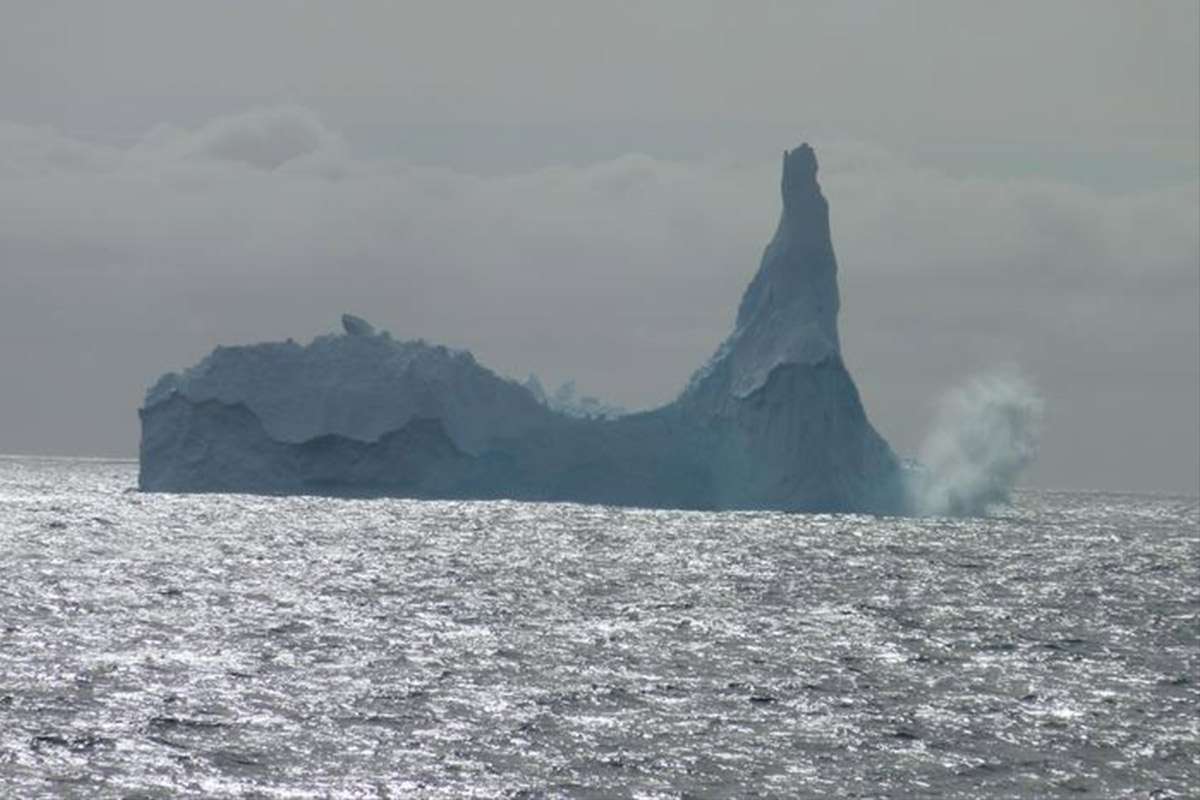
Geoscientists led by the universities of Leicester and Southampton have created a new climate record for early Antarctic ice ages.
Periods of sudden melting in the Antarctic ice sheet have been unearthed in a new climate record from over 20 million years ago by geoscientists led by the University of Leicester and the University of Southampton.
The new study reveals how sensitive our planet’s early ice ages were to the effect of the Earth’s eccentric orbit around the Sun, suggesting the Antarctic ice sheet is less stable than has been assumed.
It also provides a glimpse of how the Antarctic may behave in a world without the Greenland Ice Sheet, which will melt if emissions continue unabated.
Records show that the Antarctic ice sheet has varied in size throughout its history. These variations in size occur regularly, just like a heartbeat.
Existing records from different places in the ocean show different ‘rhythms’ in the heartbeat of early Antarctic ice ages.
This should not be possible because the imprint of the waxing and waning of the Antarctic ice sheet on the climate record should be identical everywhere in the ocean, just as it should not be possible that your leg has a different pulse rate than your arm.
These heartbeat rhythms are caused by the shape of Earth’s orbit around the Sun over the course of hundreds of thousands to millions of years.
Eccentric orbit
On a more eccentric orbit, the Earth’s distance from the Sun will vary more throughout the year, exposing it to more heat when it is close in, and less when it is further away.
The increasing heat changes Earth’s climate system, causing the ice sheet to melt, sometimes rapidly. When the Earth’s orbit is more circular, the ice sheet is more stable and less melting occurs.
This new study, funded by UK Research and Innovation/ Natural Environment Research Council and the German Science Foundation (DFG) examines the period between 28 and 20 million years ago, when Earth was warmer than today and only the Antarctic ice sheets existed.
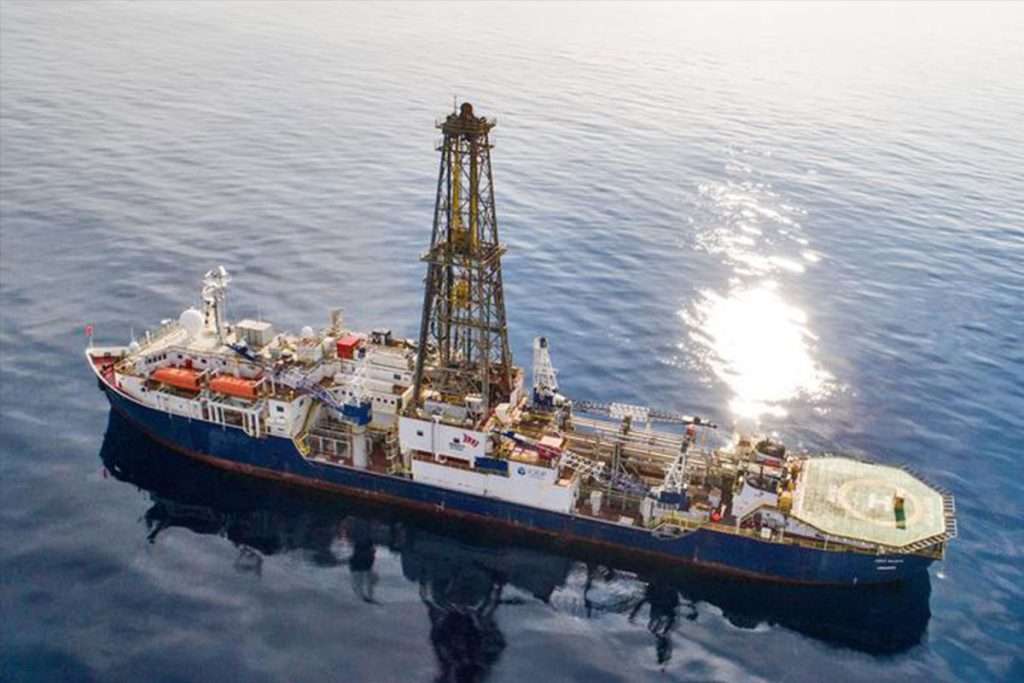
Using data obtained from geological cores recovered by an expedition of the Integrated Ocean Drilling Program (IODP), the research presents a new benchmark climate record to compare existing records to help scientists improve the accuracy of their climate models reconstructing past climate change.
These insights into the past help them understand the impact of the melting of the Antarctic Ice Sheet in the future.
Lead author Dr Tim van Peer, from the University of Leicester School of Geography, Geology and the Environment, said: “From our research, we can see that the Antarctic ice sheet is more unstable than previously thought. We demonstrate how sensitive the geologically early Antarctic ice sheet was to changes in Earth’s orbit and axis.
“Past climate changes rapidly ended some of the early Antarctic ice ages and caused large amounts of melt. ‘Rapidly’ is on geological time scales, not as rapid as we can expect to happen during modern climate change.
“We cannot assume that the modern-day Antarctic ice sheet is stable. If climate emissions continue unabated, we are on course to melt a large amount of the Antarctic ice sheet. We need to mitigate climate change by reducing our emissions. This is the only way to not cross tipping points in the stability of the Antarctic ice sheet.”
Travels in the past
The research analysed samples from geological cores obtained from the northwest Atlantic Ocean as part of an IODP expedition in 2012.
Micro-organisms from these cores record the chemistry of the ocean in the form of oxygen isotopes in their shells.
By measuring the oxygen isotope ratio, the scientists can work out if the ice sheet has grown or shrunk, and establish a timeline from the depth of that sample in the cores.
Professor Paul Wilson, principal investigator on the project at the University of Southampton, said: “It may be a surprising thing to learn that we take the pulse of the Antarctic ice sheet by doing some simple chemistry on pinhead-sized fossil shells from the deep sea floor on the other side of the world.
“But the really beautiful thing is that we can do it back through the geological record over tens of millions of years.
“Earth science is about time travel into the past and we are always learning lessons to help us understand our future”
The study is published in Nature Communications.
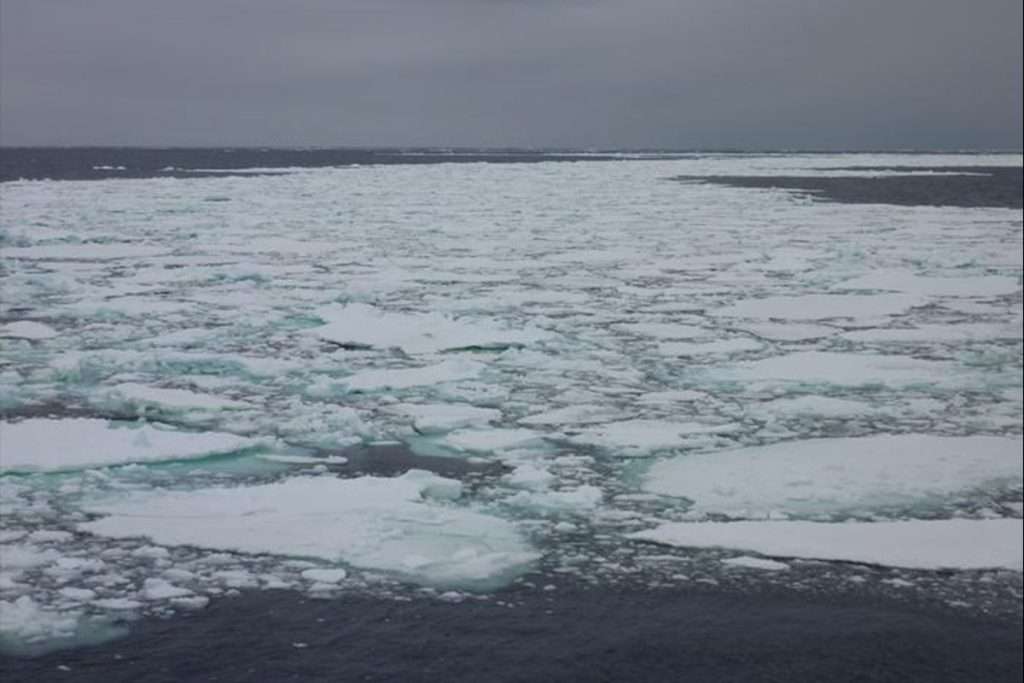
All photographs taken by the researchers during a subsequent expedition to the Antarctic aboard the same research vessel. CREDIT: University of Leicester.


