


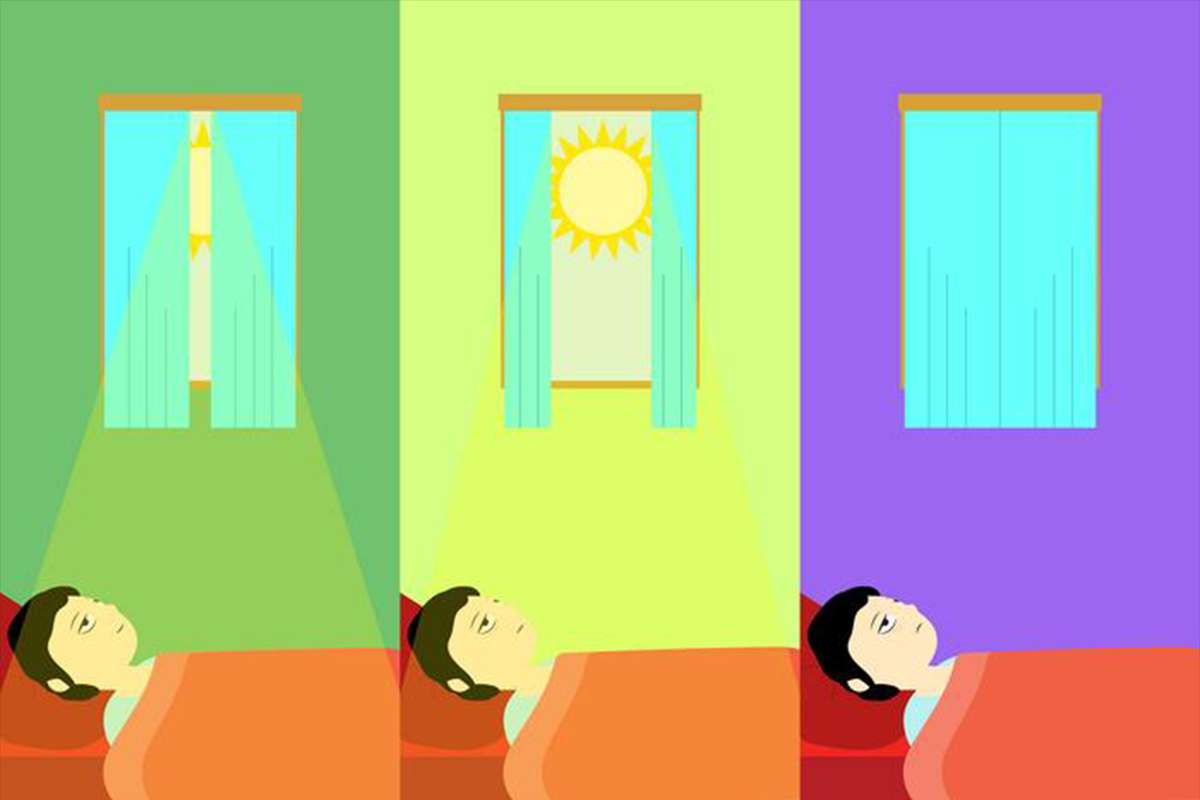
Moderate amounts of sunlight before waking up can have a positive effect. Credit: Osaka Metropolitan University.
Light conditions in the morning before waking up can affect fatigue, with a little natural light impacting positively on tiredness.
Sleep is a necessary part of people’s daily routine, but modern lifestyles and technology have ushered in an era of decreased rest time and subsequent fatigue, often making us feel tired when we first wake up in the morning.
Further, the bedroom environment, such as light, sound, and temperature, is important for a good night’s sleep, though this is often neglected in residential architecture.
In search of a conclusive remedy, common sleep studies use artificial light that is easy to control.
Osaka Metropolitan University researchers, however, believe natural sunlight could be more effective for re-creating actual living environments.
Comparative experiment
To test this, Graduate School of Human Life and Ecology student Xiaorui Wang and Professor Daisuke Matsushita led a team in examining whether introducing moderate sunlight into the bedroom just before waking would improve morning wakefulness.
Using light-shielding curtains and motorised closing devices, a comparative experiment was conducted on 19 participants under three conditions: natural light for 20 minutes before waking up (IA), natural sunlight from dawn until waking up (IB), and no natural light before waking up (CC).
After each session, participants’ sleepiness, alertness, and fatigue were measured with an electrocardiogram, electroencephalogram, and a survey.
Results revealed that participants were less sleepy in IA and IB conditions than in CC. In addition, IA was found to be one of the most effective methods for improving wakefulness, as too much sunlight in IB caused adverse effects.
Matsushita said: “In the future, we hope to control natural light in the sleep environment as it changes with the seasons and time of day, and to clarify how to introduce natural light that is suitable for a more comfortable awakening.”
The findings are published in the scientific journal Building and Environment.


