


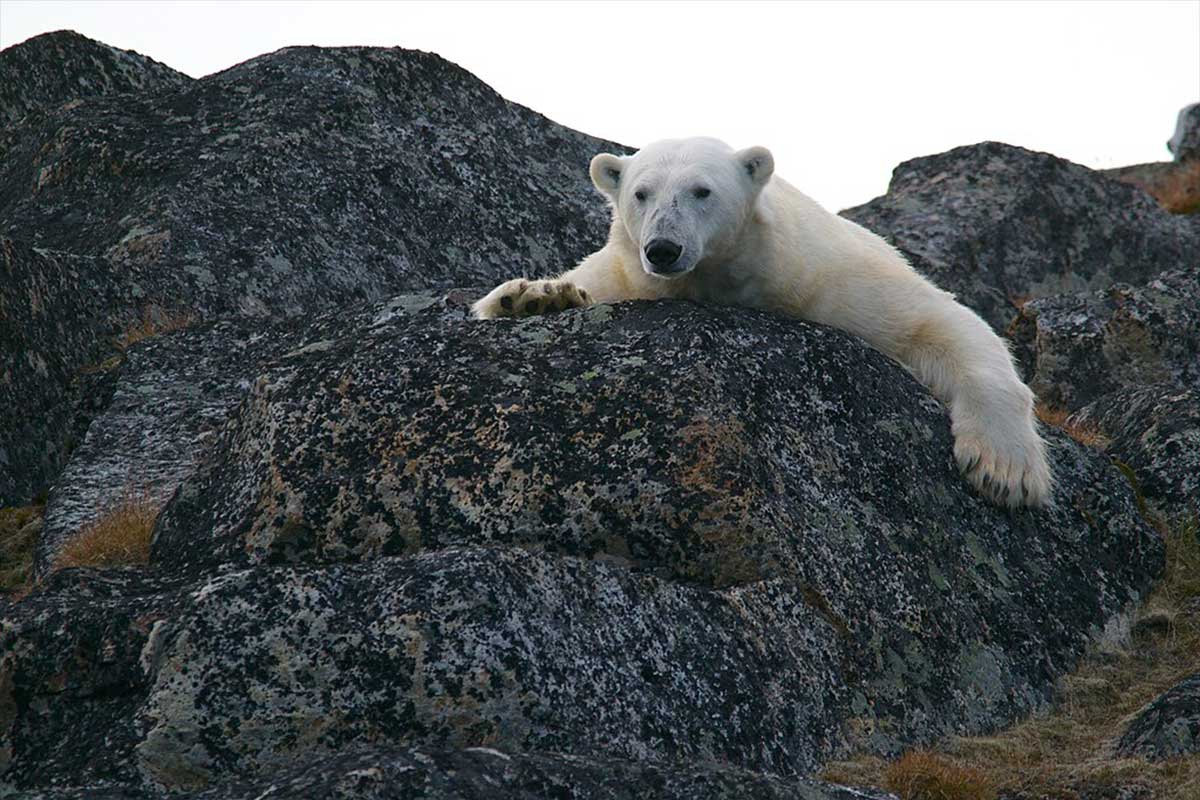
Svalbard and Jan Mayen. Credit: Andy Brunner andy_brunner, CC0, via Wikimedia Commons.
Scientists have witnessed a dramatic thaw in Svalbard, which raises concerns over a shift in the Arctic winter.
A new commentary by Dr James Bradley, Reader in Environmental Science at Queen Mary University of London, and his team reveals a dramatic and concerning shift in the Arctic winter.
During a fieldwork campaign in Svalbard in February 2025, researchers encountered exceptionally high temperatures, widespread snowmelt, and blooming vegetation.
Svalbard, warming at six to seven times the global average rate, is at the forefront of the climate crisis, with winter temperatures rising at nearly double the annual average.
The commentary highlights that winter warming in the Arctic is no longer an exception but a recurring feature of a profoundly altered climate system, challenging the long-held assumption of a reliably frozen Arctic winter.
Bradley said: “Standing in pools of water at the snout of the glacier, or on bare, green tundra, was shocking and surreal.
“The thick snowpack covering the landscape vanished within days. The gear I packed felt like a relic from another climate.”
Bare-handed
The team, accustomed to preparing for extreme cold with thermal layers, thick gloves, and insulated down, found themselves working bare-handed in the rain on the glacier.
Laura Molares Moncayo, a PhD student at Queen Mary and the Natural History Museum and a co-author on the study, added: “The goal of our fieldwork campaign was to study freshly fallen snow. But over a two-week period, we were only able to collect fresh snow once, as most of the precipitation fell as rain.
“This lack of snowfall in the middle of winter undermines our ability to establish a representative baseline for frozen-season processes.
“The unexpected melt not only disrupted our sampling plan, but also made us question how safe or feasible winter fieldwork really is under such rapidly changing conditions.”
This firsthand experience corroborates long-standing projections about Arctic amplification, but it also underscores the alarming speed at which these changes are taking hold.
The crossing of the 0°C melting threshold has a transformative impact on the physical environment, the dynamics of local ecosystems, and the very methodology of conducting scientific research in the Arctic during winter.
The implications of these rapid winter changes for the Arctic ecosystem are far-reaching.
Winter warming events can disrupt everything from microbial carbon cycling to the survival of Arctic wildlife.
These events may also create a feedback loop, accelerating permafrost thaw, microbial carbon degradation, and the release of greenhouse gases across the Arctic.
The observed meltwater pooling above frozen ground, forming vast temporary lakes and reducing snow cover to zero in large areas, further exposes the bare ground surface and leads to widespread blooms of biological activity.
Urgent action
The commentary calls for urgent action and highlights critical policy implications.
Bradley stated: “Climate policy must catch up to the reality that the Arctic is changing much faster than expected, and winter is at the heart of that shift.”
The commentary urgently calls for increased investment in wintertime Arctic monitoring, highlighting a significant lack of data and understanding regarding Arctic systems during this fastest-changing season.
More observations and experimentation are crucial, not only to establish baselines but also to project future impacts.
Furthermore, the authors stress that policymaking must shift from reactive to anticipatory strategies, recognising winter as a critical season of risk.
The challenges already faced by well-equipped scientific bases due to mid-winter warming underscore the immense pressure this might place on remote Indigenous Arctic communities, their infrastructure, transport, and emergency responses.
Safety concerns
The unexpected conditions during fieldwork, including the thin and slushy snow that hindered snowmobile access to field sites, forced researchers to reconsider how and even whether they can continue winter science as usual.
This also presents new safety concerns, including rescue efforts and the ability for the researchers to retreat quickly to the safety of the research station if they encounter polar bears while working in the field.
The commentary, Svalbard winter warming is reaching melting point, serves as a stark reminder of the accelerating pace of climate change in the Arctic, emphasising that these anomalies are, in fact, the new Arctic reality.
Donato Giovannelli, a geomicrobiologist at the University of Naples Federico II in Italy and one of the senior authors on the paper, said: “We are still unaware of the consequences that these recurring events are bringing to Arctic ecosystems, especially during the winter period, where conditions are more complex and data is scarce.
“We might have been too cautious with our messages. Irreversible changes to the Arctic climate are happening in front of our own eyes.”
The new commentary is published in Nature Communications.


