


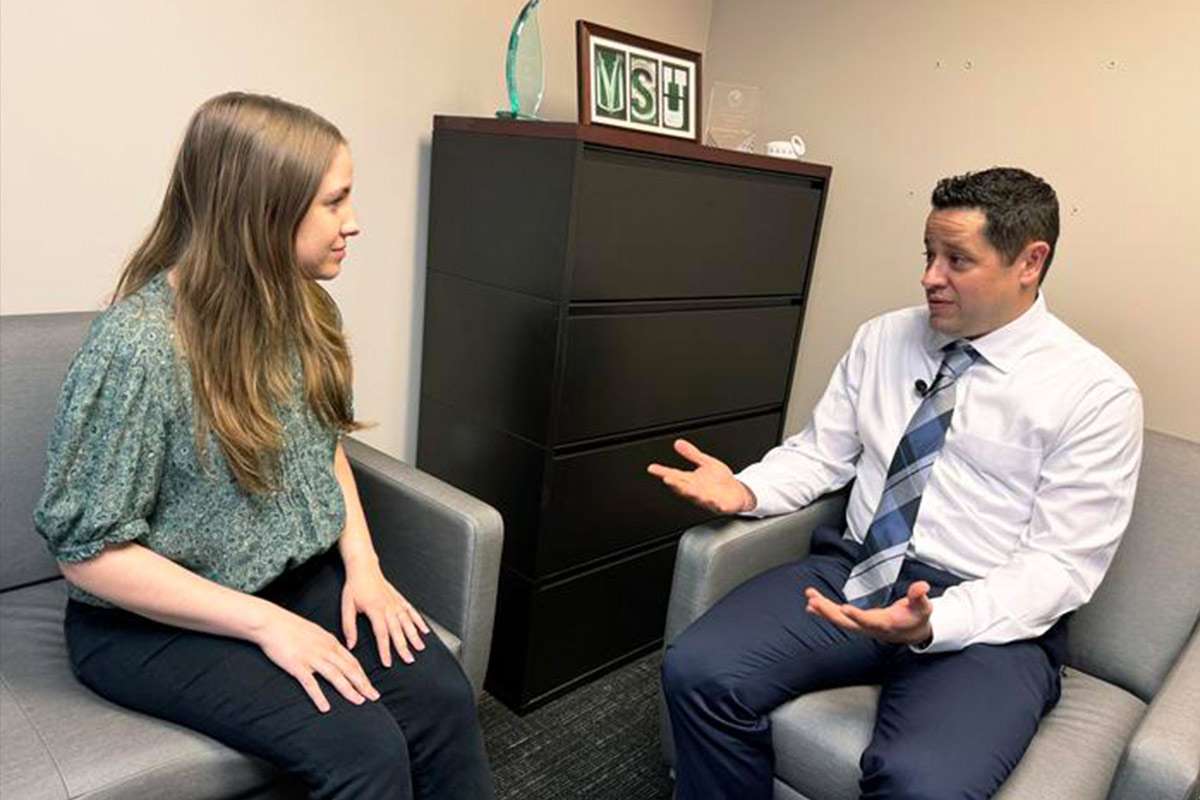
A new national survey by The Ohio State University Wexner Medical Center finds 25% of adults suspect they have undiagnosed ADHD, something psychologist Justin Barterian, PhD, says is important to talk about with your doctor to receive a proper evaluation, an accurate diagnosis and effective treatment. Credit: The Ohio State University Wexner Medical Center.
Trending social media videos have raised awareness of adult ADHD, but experts warn against self-diagnosis and incorrect treatment.
Attention deficit/ hyperactivity disorder – also known as ADHD – is typically thought of as a childhood condition.
But more adults are realising that their struggles with attention, focus and restlessness could in fact be undiagnosed ADHD, thanks in large part to trending social media videos racking up millions of views.
A new national survey of 1,000 American adults commissioned by The Ohio State University Wexner Medical Center and College of Medicine finds that 25% of adults now suspect they may have undiagnosed ADHD. But what worries mental health experts is that only 13% of survey respondents have shared their suspicions with their doctor.
That’s raising concerns about the consequences of self-diagnosis leading to incorrect treatment.
Psychologist Justin Barterian, PhD, clinical assistant professor in Ohio State’s Department of Psychiatry and Behavioral Health, said: “Anxiety, depression and ADHD – all these things can look a lot alike, but the wrong treatment can make things worse instead of helping that person feel better and improving their functioning.”
An estimated 4.4% of people ages 18 to 44 have ADHD, and some people aren’t diagnosed until they’re older, Barterian said.
He added: “There’s definitely more awareness of how it can continue to affect folks into adulthood and a lot of people who are realising, once their kids have been diagnosed, that they fit these symptoms as well, given that it’s a genetic disorder.”
The survey found that younger adults are more likely to believe they have undiagnosed ADHD than older generations, and they’re also more likely to do something about it.
Barterian said that should include seeing a medical professional, usually their primary care provider, to receive a referral to a mental health expert to be thoroughly evaluated, accurately diagnosed and effectively treated.
He advised: “If you’re watching videos on social media and it makes you think that you may meet criteria for the disorder, I would encourage you to seek an evaluation from a psychologist or a psychiatrist or a physician to get it checked out.”

Allison Burk takes medication to manage ADHD. She was diagnosed with the condition as an adult, resolving years of unanswered questions about issues with focus and impulsivity that affected every area of her life. Credit: The Ohio State University Wexner Medical Center.
What is Adult ADHD?
Adults struggling with ADHD will have problems with paying attention, hyperactivity and impulsivity that are severe enough to cause ongoing challenges at school, work and home. These symptoms are persistent and disruptive and can often be traced back to childhood.
Adult ADHD occurs in:
- Adults who were diagnosed as children, but symptoms continue into adulthood;
- Adults who are diagnosed for the first time, despite experiencing symptoms since they were younger that had been ignored or misdiagnosed; and
- Hyperactivity as a symptom is typically less present in adults than in children. Many adults with ADHD struggle with memory and concentration issues. Symptoms of ADHD often worsen with stress, conflict or increased demands in life.
The three types of ADHD are:
- Inattentive ADHD – Inability to pay attention and distractibility. This also is known as attention-deficit disorder (ADD);
- Hyperactive and impulsive ADHD – Hyperactivity and impulsivity; and
- Combined ADHD – This type causes inattention, hyperactivity and impulsivity.
ADHD can be difficult to diagnose in adults, because some of the symptoms are similar to those in other mental health conditions, such as depression or anxiety.
Barterian concluded: “Symptoms of ADHD can look different between different people. Some people might have more difficulty focusing on lectures or with organisation, while others may have more social difficulties with impulsivity and trouble following along in conversations.”


